Lead generation is the lifeline of every growth-focused business. Whether you run a SaaS company, an eCommerce store, a B2B agency, or a local service business, your ability to consistently attract and convert potential customers determines your revenue trajectory.
But lead generation is not just about collecting email addresses or phone numbers. It’s about attracting the right audience, capturing their interest, nurturing their trust, and guiding them toward becoming paying customers.
In this comprehensive guide, we’ll break down:
- What lead generation really means
- Why it matters more than ever
- Types of leads
- Top lead generation strategies
- Tools and channels
- How to qualify leads
- How to distribute leads effectively
- Metrics that matter
- Common mistakes to avoid
Let’s dive in.
What Is Lead Generation?
Lead generation is the process of attracting potential customers (leads) and capturing their contact information or intent so you can nurture them toward a purchase.
A “lead” is anyone who has shown interest in your product or service. This interest can be expressed by:
- Filling out a form
- Downloading a resource
- Subscribing to a newsletter
- Requesting a demo
- Calling your business
- Engaging with your content
Lead generation sits at the top of the sales funnel and bridges marketing and sales.
Why Lead Generation Is Crucial for Business Growth
- Predictable Revenue Pipeline
Consistent lead flow ensures your sales team always has opportunities to close. - Targeted Customer Acquisition
Instead of chasing random prospects, you attract people who are already interested. - Lower Customer Acquisition Cost (CAC)
Inbound leads are often cheaper than cold outreach. - Scalability
Once a system works, you can scale traffic, automation, and conversions. - Data-Driven Optimization
You can track performance and improve conversion rates systematically.
Types of Leads
Understanding lead types helps you prioritize effort and personalize follow-ups.
1. Marketing Qualified Leads (MQLs)
These leads have engaged with marketing materials (e.g., downloaded an ebook, attended a webinar) but are not yet ready to buy.
2. Sales Qualified Leads (SQLs)
These leads show strong buying intent — requesting demos, pricing details, or consultations.
3. Product Qualified Leads (PQLs)
Common in SaaS. These are users who tried the product (free trial/freemium) and show signs of conversion potential.
4. Service Qualified Leads
Existing customers expressing interest in additional services or upgrades.
The Lead Generation Funnel
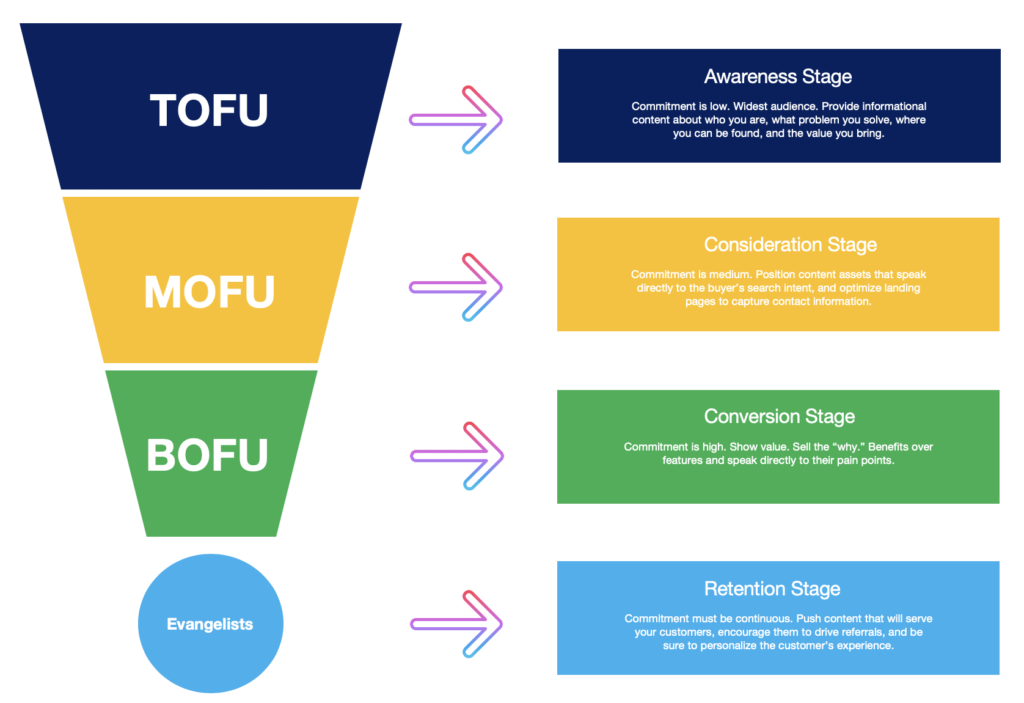
Lead generation follows a structured funnel:
1. Awareness
The prospect discovers your brand through SEO, social media, ads, or referrals.
2. Interest
They consume content — blogs, videos, case studies.
3. Consideration
They compare options and evaluate solutions.
4. Conversion
They fill out a form, book a call, or make a purchase.
Your strategy must support each stage.
Top Lead Generation Strategies
1. Search Engine Optimization (SEO)
Ranking for high-intent keywords brings consistent organic leads.
Focus on:
- Transactional keywords
- Long-tail keywords
- Problem-based queries
- Industry-specific terms
High-quality blog content, optimized landing pages, and strong backlinks improve performance.
2. Content Marketing
Content builds trust before the sales conversation.
Effective formats:
- Blog posts
- Case studies
- Whitepapers
- Checklists
- Webinars
- Video tutorials
Provide value first — conversion follows naturally.
3. Paid Advertising
Paid channels accelerate lead flow.
Common platforms:
- Google Search Ads
- Facebook & Instagram Ads
- LinkedIn Ads (great for B2B)
- YouTube Ads
The key is targeting and landing page optimization.
4. Landing Pages and Lead Magnets
Your landing page must:
- Have a clear headline
- Show a strong value proposition
- Include social proof
- Minimize distractions
- Contain a simple form
Lead magnets that work well:
- Free audits
- Templates
- Industry reports
- Free trials
- Discount codes
5. Email Marketing
Email remains one of the highest ROI channels.
Use:
- Welcome sequences
- Drip campaigns
- Educational content
- Case studies
- Re-engagement campaigns
Segmentation improves performance dramatically.
6. Social Media Marketing
Organic social builds awareness, while paid social drives conversions.
Focus on:
- Value-based content
- Short-form video
- Authority-building posts
- Community engagement
Consistency is key.
7. Webinars and Events
Webinars are powerful for high-ticket or B2B lead generation.
They:
- Build authority
- Provide deep education
- Pre-qualify prospects
- Encourage live interaction
Lead Qualification: Not All Leads Are Equal
Generating leads is step one. Qualifying them ensures your sales team focuses on high-potential prospects.
Use frameworks like:
BANT:
- Budget
- Authority
- Need
- Timeline
Lead Scoring:
Assign points based on:
- Website visits
- Email engagement
- Job title
- Company size
- Form responses
High scores indicate stronger buying intent.
Distribute Leads Effectively
Generating leads is only half the battle. How you distribute leads within your organization significantly impacts conversion rates and revenue.
When leads are not routed correctly:
- Follow-ups are delayed
- High-intent prospects go cold
- Sales teams overlap efforts
- Opportunities are lost
To ensure smooth lead distribution:
1. Use CRM Automation
Modern CRM systems automatically assign leads based on:
- Geography
- Industry
- Product interest
- Deal size
- Sales rep availability
This ensures leads reach the right representative instantly.
2. Round-Robin Assignment
For teams handling similar types of leads, round-robin distribution ensures fairness and equal opportunity.
3. Skill-Based Routing
Some leads require specialized expertise. Route enterprise leads to senior reps and smaller deals to junior reps.
4. Speed-to-Lead Optimization
Studies show contacting a lead within 5 minutes dramatically increases conversion rates. Automate notifications and follow-up triggers.
5. Clear Ownership Rules
Define who owns a lead and when it transitions between marketing and sales.
6. Tracking and Accountability
Monitor:
- Response time
- Conversion rate per rep
- Follow-up attempts
- Revenue per lead source
Proper lead distribution transforms marketing efforts into predictable revenue growth.
Tools for Lead Generation
Popular tools include:
- CRM systems
- Email automation platforms
- Landing page builders
- Ad platforms
- Chatbots
- Marketing automation software
Integration between tools is critical for seamless tracking.
Key Lead Generation Metrics
To improve performance, measure what matters:
1. Cost Per Lead (CPL)
Total marketing spend divided by total leads.
2. Conversion Rate
Percentage of visitors who become leads.
3. Lead-to-Customer Rate
Percentage of leads that convert into paying customers.
4. Customer Acquisition Cost (CAC)
Total cost of acquiring one customer.
5. Return on Investment (ROI)
Revenue generated relative to marketing spend.
Common Lead Generation Mistakes
- Focusing on quantity over quality
- Ignoring landing page optimization
- Weak follow-up process
- Not nurturing leads
- Poor targeting in paid ads
- No clear value proposition
- Delayed response time
Avoiding these mistakes can dramatically improve performance.
Inbound vs Outbound Lead Generation
Inbound
- SEO
- Content marketing
- Social media
- Webinars
Pros:
- Higher trust
- Lower long-term cost
- Scalable
Outbound
- Cold calls
- Cold emails
- Direct messaging
- Paid ads
Pros:
- Faster results
- Immediate targeting
Most successful companies use a hybrid model.
Advanced Lead Generation Tactics
- Account-Based Marketing (ABM)
- Retargeting campaigns
- Interactive tools and quizzes
- AI-driven personalization
- Conversion rate optimization (CRO)
- Referral programs
Advanced strategies amplify baseline systems.
How to Build a Sustainable Lead Generation System
- Define your ideal customer profile (ICP)
- Choose 2–3 primary channels
- Create strong lead magnets
- Build optimized landing pages
- Automate follow-ups
- Implement CRM tracking
- Continuously test and optimize
Consistency beats complexity.
The Future of Lead Generation
Lead generation is evolving toward:
- AI personalization
- Predictive analytics
- Conversational marketing
- Privacy-focused data collection
- First-party data strategies
Companies that adapt will dominate.
Final Thoughts
Lead generation is not a one-time campaign. It’s a continuous system that combines traffic generation, conversion optimization, lead qualification, proper distribution, and consistent nurturing.
When done correctly, it becomes a predictable growth engine.
The businesses that win are not necessarily the ones generating the most leads — but the ones generating the right leads, responding quickly, and nurturing relationships strategically.
If you focus on quality, speed, automation, and optimization, lead generation can transform your business into a scalable revenue machine.