You want to send a thoughtful Hanukkah greeting, but every draft sounds like something you could send to anyone. Perhaps you are celebrating miles apart, writing to a coworker, or unsure how personal your message should be.
Start with one true detail: a shared memory, something you appreciate, or a tradition the recipient has mentioned. Add a warm holiday wish. That small effort gives your message a reason to matter beyond the holiday itself.
Why Do Personal Details Make Holiday Greetings Meaningful?
A specific message shows that you noticed something about the person receiving it. “Thank you for making room at your table when I was new in town” communicates more than a general wish for happiness.
Relationships matter to people. In an American Psychological Association survey, 92% of U.S. adults identified relationships as a source of meaning, while 62% selected friendships. The APA’s findings on connection provide context for thoughtful outreach, although the survey did not test holiday cards.
A greeting can acknowledge a relationship without becoming elaborate. Two sincere sentences may express more than a paragraph of seasonal language.
Start With a Card That Leaves Room for Your Story
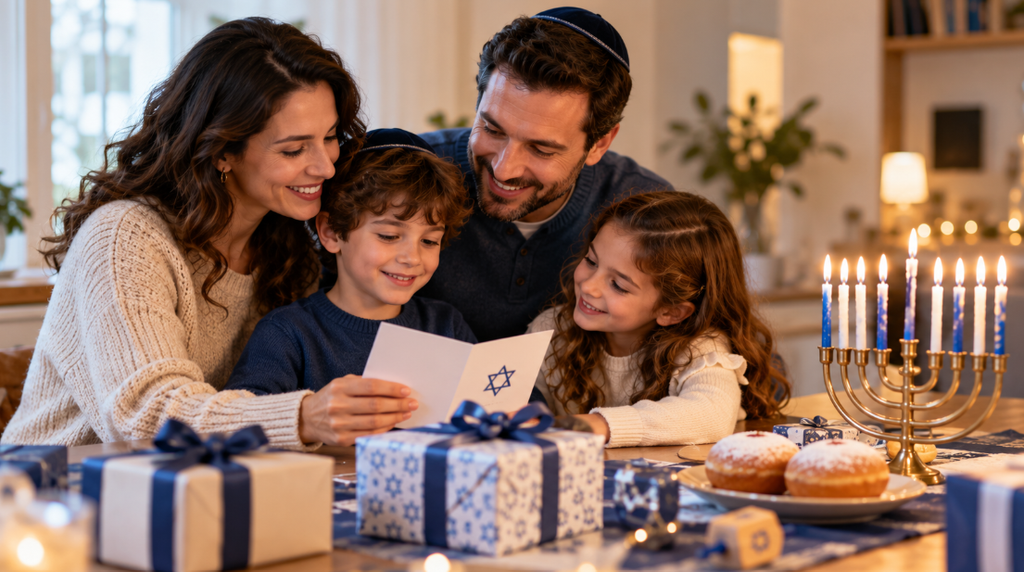
Digital cards provide space for words, photos, and short recordings. When choosing hanukkah ecards, think about what you want the recipient to revisit: a family memory, a sincere thank-you, or greetings from people they miss.
Choose the message first and the design afterward. The personal detail should carry the meaning.
How Can You Personalize a Hanukkah Message?
Use this simple structure: greeting + specific detail + personal wish.
Begin with “Happy Hanukkah” or another greeting you comfortably use. Then mention a real memory, contribution, or quality. Finish with a wish that fits the person.
For example:
“Happy Hanukkah, Rachel! I still smile when I remember our kitchen full of neighbors last winter. Wishing you more evenings surrounded by people you love.”
You do not need a Hanukkah memory. A friendship, family moment, or everyday act of kindness works too.
If you are stuck, ask yourself: “What would this person recognize as something only I would mention?”
What Should You Write for Different Relationships?
For parents and grandparents
Mention something they passed along, such as a recipe, story, or welcoming habit.
“Happy Hanukkah, Grandma. I made your latkes again and remembered your advice about waiting until the oil is ready. Thank you for giving us traditions we can keep sharing.”
For friends and partners
Draw on shared experiences and your usual conversational tone.
“Happy Hanukkah, Ben. Your check-in calls made a difficult month easier. I hope these eight nights bring you good company, good food, and time to relax.”
Use humor when it reflects your relationship. A familiar joke usually lands better than a borrowed holiday pun.
For children
Recognize something specific they did or enjoyed.
“Happy Hanukkah, Maya! Watching you teach your little brother the dreidel game made me smile. I hope you have lots of fun playing together again.”
For coworkers
Keep appreciation relevant to your working relationship.
“Happy Hanukkah, Leah. Thank you for helping me prepare for my first client presentation. Wishing you and your loved ones a peaceful celebration.”
Send holiday-specific greetings when you know the recipient celebrates. Avoid guessing from a name or appearance.
Add Gratitude Without Making the Message Overwhelming
Gratitude works best when you name the action and its significance: “You checked on me after my move, and that helped the new city feel less unfamiliar.”
Research offers some support for expressing appreciation. A 2026 experiment involving 10,696 participants across 34 countries found that brief gratitude practices improved positive emotions immediately, although effects varied across practices and countries. The study summary on PubMed concerns gratitude exercises, not Hanukkah greetings or lasting holiday memories.
Keep your note proportionate to the relationship. Appreciation should feel freely offered, without asking the recipient to respond with equal emotion.
Make the Greeting Respectful of Their Celebration
Hanukkah, also spelled Chanukah, is the eight-night Festival of Lights. Familiar traditions include lighting a hanukkiah, often called a Hanukkah menorah, playing dreidel, and enjoying foods such as latkes or sufganiyot.
Families observe differently. Mention a tradition when you know it belongs to the recipient’s experience. Avoid assuming everyone exchanges gifts, follows the same religious practices, or celebrates in the same household arrangement.
“Happy Hanukkah” is sufficient if Hebrew wording feels unfamiliar. Treat the holiday on its own terms, and let the recipient’s preferences guide messages to interfaith families.
Use the Three-Check Test Before Sending
Personalization can be superficial. Test your draft with three questions:
- Detail: Does it contain something specific to this person?
- Truth: Is that detail accurate, rather than an assumption?
- Fit: Does the emotional tone match your relationship and their circumstances?
Compare “Happy Hanukkah, Sam! Wishing you joy” with “Happy Hanukkah, Sam. I loved hearing how you taught your daughter your family’s candle-lighting song.”
The second message recognizes something Sam actually shared. However, it only works if that conversation happened.
For someone grieving or having a difficult year, a quieter message may fit better: “Thinking of you this Hanukkah. I would love to bring dinner over if that would help.”
Turn Photos and Group Greetings Into a Keepsake
Add one photo with a caption explaining why it matters. An old family picture becomes more personal with “Your kitchen, three generations, and everyone waiting for the first batch.”
For group cards, give contributors a focused prompt: share one memory, one thank-you, or one wish. Let each person use their own voice.
Ask permission before including private photos or stories, especially in workplace greetings. Send the finished card through a channel the recipient uses, with an optional invitation to reconnect.
Write One Detail Worth Remembering
Choose one person, recall one true detail, and write the greeting as you would speak to them. Check the tone, then add a photo or recording only if it contributes something meaningful.
The message becomes memorable when it reflects a relationship the recipient recognizes and values.
Frequently Asked Questions
What should I write in a Hanukkah card?
Start with a warm greeting, add one specific memory or expression of appreciation, and finish with a wish that suits the recipient. You can mention a family tradition if you know they observe it. Keep the wording natural; a short, accurate message can feel thoughtful without being elaborate.
Can I say “Happy Hanukkah” if I am not Jewish?
Yes. “Happy Hanukkah” is a respectful greeting when you know someone celebrates the holiday. You do not need Hebrew wording or detailed religious knowledge to express goodwill. Keep the message sincere, avoid assumptions about their observance, and let your existing relationship guide how personal you make it.
How do I personalize a short Hanukkah message?
Add one recognizable detail rather than several general wishes. Mention something the recipient did, a conversation you remember, or a plan you genuinely hope to share. For example: “Happy Hanukkah! I loved our Sunday cooking session and hope we can make another batch together soon.” Sign it naturally.
What is an appropriate Hanukkah message for a coworker?
Use a friendly greeting and, if appropriate, a specific professional thank-you. “Happy Hanukkah! Thank you for your patient guidance during my first month” is warm without becoming intrusive. Avoid assumptions about religious practices or time off, and keep participation in group greetings optional for everyone involved.