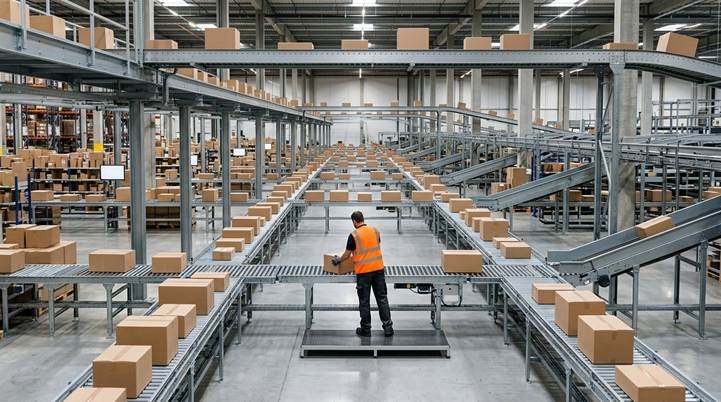
The unseen logistics network that powers a successful e-commerce marketing campaign.
By a marketing fulfillment industry contributor. Your new marketing campaign is a success. The ads are working, social media is buzzing, and orders are flooding in. But this is a moment of high risk. The work that happens after the click, picking, packing, and shipping, is where many promising brands fail. One late shipment or wrong item can erase the good reputation you spent thousands to build. It can turn a potential lifelong customer into a one-star review.
This pressure is even higher in a fast-paced market like Las Vegas. The city’s economy isn’t just for locals. It’s driven by events and has a tourism impact of $80.9 Billion, according to the Las Vegas Convention and Visitors Authority. With hotel occupancy regularly around 80%, the city hosts a huge, always-changing group of people for trade shows and conferences. For direct-to-consumer brands, this setting offers a special opportunity but also a major shipping challenge. Getting this right involves more than just packing boxes; it’s a complex system of managing inventory and processing orders. Understanding what marketing fulfillment las vegas nv involves is the first step to avoiding these expensive mistakes, especially as national e-commerce sales keep growing. In the first quarter of 2024 alone, e-commerce sales increased 8.6 percent year-over-year, per the U.S. Census Bureau.
Quick answer: To check a fulfillment partner, look past simple pick-and-pack fees. Check if they can handle sudden sales spikes, how well their software connects to yours, and how they keep track of inventory. The right partner is a strong support for your marketing, not a weak link.
What’s inside
· What’s the real cost of a fulfillment error?
· How do I evaluate a provider’s technology stack?
· What questions should I ask about inventory management?
· How does a Las Vegas location impact shipping strategy?
· What should I look for in a Service Level Agreement (SLA)?
· Frequently Asked Questions
What’s the real cost of a fulfillment error?
The true cost of a fulfillment mistake goes far beyond the price of the item. It’s a chain of events that costs you money, damages your brand, and can lose you a customer for good. A single wrong order doesn’t just cost you the product. It also adds the cost of return shipping, shipping the right item, and the time your team spends fixing the mistake. These direct costs can quickly turn a profitable sale into a big loss.
The bigger problem is losing your customer’s trust. When a customer receives the wrong item, it breaks the unspoken promise your brand made. This is especially damaging in the growing e-commerce market. With U.S. e-commerce sales growing 8.6 percent year-over-year in early 2024, according to the U.S. Census Bureau, the large number of sales means even a small error rate can affect thousands of people. Each of those errors is a chance for a competitor to win a customer you paid to get but couldn’t keep.
❝ A common rule of thumb in the industry is that the total cost of a single fulfillment error, when you add up the costs of returns, reshipment, labor, and the lost value of that customer, is five to ten times the price of the original product. This hidden cost is what makes operational accuracy so important.
This risk is even bigger in a market like Las Vegas, which is all about events and important business deals. The city’s massive $80.9 Billion tourism economy, as reported by the Las Vegas Convention and Visitors Authority, means your customer might be a conference attendee. They may have needed a product delivered to their hotel for a specific event. A late or wrong shipment isn’t just annoying. For them, it can be a disaster for their job, which guarantees they will never trust your brand again. They will also likely share their bad experience with others in their professional network.
How do I evaluate a provider’s technology stack?
You check a provider’s technology by testing how well it connects with your sales platforms. You also need to confirm their warehouse management system (WMS) gives you correct, live data. The software connecting your online store to their warehouse is the control center of your shipping operation. A weak connection can lead to lost orders, wrong inventory levels, and shipping delays, even if the warehouse itself runs well.
Start with the connection itself. Does the provider offer a pre-built, stable connection for your e-commerce platform, whether it’s Shopify, Magento, or a custom API? Ask a potential partner for their API uptime percentage for the last 12 months. An uptime below 99.9% should be a serious concern, because even short outages during a big sale can cause a chain reaction of data errors. You should also ask for a demo of their client portal. See if you can easily view inventory levels, track orders, and get reports without having to call someone for help with basic information.
❝ The most common problem isn’t a worker’s mistake. It’s a delay in data between your store and the WMS. Ask a provider if their system updates inventory levels in real-time or in batches. A system that only updates every hour can lead to selling items you don’t have. This causes canceled orders and unhappy customers.
Finally, understand what their WMS can do. This software runs everything in the warehouse. A modern WMS should automate decisions about picking routes, packing stations, and shipping labels to be as efficient as possible. The key is visibility. The system should give you a clear view of every one of your products from the moment it arrives to the moment it ships to a customer.
What questions should I ask about inventory management?
To check a provider properly, ask specific questions about how they receive items, how they make sure inventory counts are correct, and what they do when they find a mistake. A fulfillment center is, basically, a protector of your products. How well they track your inventory is key to making a profit. Bad inventory management leads to lost items, running out of stock, and money tied up in “ghost” inventory you can’t sell.
First, look at the inbound process. Ask for their standard service-level agreement (SLA) for receiving. How long does it take from when a shipment arrives until the products are checked in and ready to sell? A good goal for an efficient warehouse is 24 to 48 hours. Anything longer means your products are sitting around instead of making you money. Next, ask about accuracy. What is their inventory accuracy rate, and how do they measure it? Top facilities keep rates of 99.8% or higher.
The most important question you can ask is about their counting method. Do they do one big, disruptive inventory count each year, or do they use a continuous cycle counting program? Cycle counting is a much better method. It involves counting small sections of the warehouse every day or week. It finds and fixes small errors before they become big problems, keeps accuracy high all year, and avoids shutting down the warehouse for a full count. Ask a potential partner to describe their cycle counting process and how they fix errors. Their answer will show you how well they run their operations.
How does a Las Vegas location impact shipping strategy?
A Las Vegas fulfillment center gives you a key advantage for reaching West Coast customers and serving the city’s special, event-based economy. The city’s location makes it a natural shipping hub, allowing for 1-to-2-day ground shipping to big cities like Southern California, Phoenix, and Salt Lake City. This can greatly lower your shipping costs and delivery times compared to a warehouse farther away, which is a key part of keeping e-commerce customers happy.
However, the real value of a Las Vegas location is its ability to support the constant flow of conferences, trade shows, and corporate events. This requires special skills that go beyond normal shipping to customers. For example, delivering marketing materials or product samples to a specific booth at the Las Vegas Convention Center is a difficult shipping task. It involves dealing with strict delivery times, special label rules, and the complex process of drayage, which is the movement of freight from the loading dock to a specific booth.
When checking a provider in Las Vegas, ask about their direct experience with deliveries to major venues like the LVCC, Mandalay Bay, and the Venetian Expo. Do they have set procedures for working with convention center and hotel staff? A provider who understands these local systems can stop your important event materials from getting lost in a hotel mailroom or being rejected for bad paperwork. This skill is necessary for any brand that uses live events as a main part of its marketing.
What should I look for in a Service Level Agreement (SLA)?
You should look for specific, measurable promises with clear deadlines in a Service Level Agreement (SLA). An SLA is the official contract that sets the performance standards a partner must meet. Vague promises like “fast shipping” or “quality service” are meaningless. A strong SLA turns these goals into real numbers that hold the company accountable. It is the most important document for judging a provider’s work and your main tool to fix things if performance is poor.
A strong SLA is built on three main performance areas. The first is receiving. Look for a “dock-to-stock” guarantee, which says how long it takes for your new inventory to be processed and made available for sale. A standard promise is 24 to 48 business hours. The second is order processing. This is often called “order-to-ship” time. It measures the time from when an order is received to when it is packed and given to a shipping carrier. A good SLA will promise to ship orders the same day if they are placed before a certain cutoff time, like 2:00 PM local time.
❝ The most overlooked part of an SLA is the “remedy” clause. What happens if the provider fails to meet these standards? A good agreement will list penalties, like service credits for each day inventory is late or for each order that ships late. If a provider is unwilling to include financial penalties for failures, it might show they aren’t confident in their own work.
Finally, the SLA must define accuracy. This includes two different numbers: order accuracy and inventory accuracy. Order accuracy should be 99.5% or higher, meaning fewer than 5 in 1,000 orders are shipped with the wrong items. Inventory accuracy, checked through cycle counts, should be even higher, usually above 99.8%. In a high-stakes market like Las Vegas, where marketing materials for a major trade show might be on the line, these percentages are not just numbers. They show how reliable the partnership is and whether you can run your business without expensive mistakes.
Frequently asked questions
What is a fulfillment company? A fulfillment company is a partner that handles your physical operations. It does everything that happens after a customer clicks “buy” on your website: storing your products, picking the right items for an order, packing them, and shipping them to the customer. This lets you focus on marketing and growth without managing a warehouse.
What does a fulfillment center do on a daily basis? A fulfillment center’s main daily tasks are receiving, storing, picking, packing, and shipping. They receive new products from your suppliers, enter them into their warehouse management system (WMS), and put them in assigned storage spots. As orders come in, workers pick the items, pack them in boxes, put on shipping labels, and give the packages to carriers like UPS, FedEx, or USPS.
How is fulfillment pricing typically structured? Pricing is usually broken down into four main parts. You’ll see separate charges for receiving products (often per pallet or per hour), storage (per pallet or cubic foot per month), order fulfillment (a fee per order plus a fee for each item picked), and the actual cost of shipping from the shipping carrier. Make sure you get a clear list of all possible fees.
What is ‘kitting’ and why is it important for marketing? Kitting is the process of putting several separate items together into a single “kit” that can be shipped as one product. This is very important for marketing materials, subscription boxes, or special bundles. For example, a fulfillment partner could put together a trade show welcome kit by combining a branded box, a notebook, a pen, and a product sample into one package that is ready to ship.
How are customer returns handled? This process, often called “reverse logistics,” is a key service. When a customer returns an item, the fulfillment center receives it, inspects it based on your rules, and handles it. They will decide if the product can be restocked and sold again, needs to be set aside, or should be thrown away. They update your inventory records at each step.
What does the onboarding process with a new partner look like? The setup process usually involves three main steps. First is technology integration, where you connect your e-commerce store to the provider’s WMS so orders can flow automatically. Second is sending your first shipment of products to their warehouse. Finally, you’ll run some test orders to make sure all systems are working correctly before you “go live” and send all customer orders to them.
The Final Decision: From Process to Partnership
Choosing a fulfillment provider is more than just outsourcing your shipping. You are trusting another company with a key part of your brand’s promise to customers. The detailed questions about inventory, cycle counting, and SLAs are not just small details. They are key tools for judging how well a partner runs their business and if they are committed to being accountable. A provider’s answers show the real strength of the systems that will represent your business.
In a fast-changing market like Las Vegas, this check is even more important. The ability to handle the complex, time-sensitive needs of convention centers and corporate events is a strong sign of a provider’s overall accuracy. A partner who has mastered these high-stakes deliveries will likely handle your normal customer orders with the same care. This skill is the real test of how well they operate.
Ultimately, your decision should be based on finding a true partner, not just a vendor. The right fit is not found by the lowest price, but by the provider whose methods and contracts show they understand your most important business needs. Checking for these special situations, not just the everyday tasks, is how you build a strong foundation that can grow with your business.
About the author
ShipOffers is a fulfillment and logistics company that provides inventory management, global shipping, and product sourcing for e-commerce and direct-to-consumer brands. Since 2001, the company has supported businesses by handling their pick, pack, and ship operations from its network of fulfillment centers. The team at ShipOffers also helps clients with custom product creation and private labeling, specializing in the health and beauty industry.